It takes a society to heal war trauma
12 November 2026
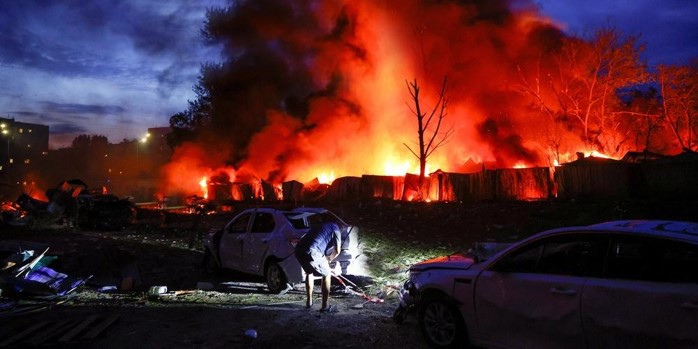
Geertrui Serneels of Solentra on the psychological impact of war, dehumanisation and the role of society in processing trauma
The original publication can be found here.
In the opera Wozzeck, Alban Berg tells the story of a soldier who, through war, poverty and social humiliation, becomes psychologically unhinged and is ultimately driven to violence. A hundred years after the premiere of Wozzeck, the themes of war, violence and dehumanisation remain burning issues. What does war do to the human psyche? And how can refugees process their trauma when the society in which they arrive does not always offer safety and recognition? Geertrui Serneels, affiliated with the VUB and director of Solentra, explains.
De Munt is staging a brand-new production of Wozzeck in November 2026.
A hundred years after the premiere of Wozzeck, the inhumane treatment of vulnerable people is still recognisable. Are the psychological mechanisms of war trauma still the same today?
Geertrui Serneels: “Yes, I believe these mechanisms are inherent to human beings and therefore timeless. Trauma arises from a life-threatening event: something unexpected in which you lose control and experience danger. Our stress system then automatically switches to fighting, fleeing or freezing. With post-traumatic stress, that system remains, as it were, permanently switched on. Memories stay very acute and present themselves through the senses, forcing themselves upon us through flashbacks and nightmares, among other things.
In trauma therapy, we try to transform those so-called ‘hot memories’ back into ‘cold memories’: memories that are given a place and a time, and that you can summon yourself whenever you wish. The neurobiological stress response is universal, but the way post-traumatic stress manifests itself can differ culturally. Refugees, for example, tend to report physical complaints first. As a result, they often end up with a GP or pediatrician initially, while there may be underlying post-traumatic stress.”
“War undermines basic trust in other people and in the world”
Does everyone who experiences war develop a post-traumatic stress disorder?
“No, having experienced war or other traumatic events does not necessarily mean you will develop PTSD. What war does affect in everyone, however, is basic trust: trust in yourself, in other people and in the world. That is something universal and it forms the foundation for further development, for taking initiative and for building relationships. War can seriously undermine that fundamental trust.”
Can the society in which refugees arrive make that recovery more difficult?
“Certainly. I think that is one of our biggest problems today. When people are confronted anew with hostility and exclusion after their flight, their environment continues to feel unsafe. Not only does the original trauma become harder to process, but new wounds can also be inflicted.
Do you remember the Chilean refugees who arrived here after the fall of Pinochet? They were welcomed as heroes, all the way up to parliament. That creates a very different climate, one in which people feel welcome and recognised, and in which they are given more space to process their trauma. That is a fundamental difference from a society in which refugees are told that they are a danger, that they must return, or that they are taking our jobs. The social climate can therefore strongly promote recovery, but it can equally stand in its way.
At the same time, we must be careful not to approach refugees exclusively through their victimhood. Having experienced war trauma does not mean you cannot work or go to school. On the contrary, these activities provide structure to your day and help you rebuild perspective. Together with the refugee, we need to look at what is still possible. It is important that we help them broaden their identity again, so that they do not continue to identify exclusively with their wounds.”
“Trauma is not automatically passed on”
Trauma can also continue to affect families and subsequent generations. How great is that impact?
“We distinguish between intergenerational and transgenerational trauma. Intergenerational trauma is passed from parents to their children through upbringing, behaviour and attachment. With transgenerational trauma, that impact carries across multiple generations.
Traumatised parents can find it harder to offer their children the safety and predictability needed to form secure attachments. They are sometimes more irritable, withdraw, or are less available due to their depressive state. The way they communicate about their trauma also plays a role: some children hear too many details, while others grow up in a silence that is difficult to comprehend. That too can influence a child’s behaviour and development.
Trauma is not automatically passed on. Children are resilient and many different factors come into play. But untreated PTSD can indeed have consequences for the next generation.”
What role does Solentra play in providing that support?
“Solentra came into being roughly twenty years ago from the child and adolescent psychiatry department of UZ Brussel. We noticed that children with a migration background had more difficulty finding their way to mental health care. The main barriers were language, cultural differences, the stigma surrounding psychotherapy and complex care needs. After all, alongside war trauma, there are also loss, grief and the challenges of building a new life.
Today we work with more than 30 psychologists across 4 locations in Flanders, and we receive over 1,500 referrals each year. We combine specialised, transcultural trauma treatment with a community-based approach. In doing so, we also involve schools, aid workers and other social actors, so that they learn to work in a trauma- and culture-sensitive way and help build a safe future perspective together with the refugee.”
“We often lose sight of the human being behind the refugee”
In the public debate, refugees are often presented as one large, anonymous group. What effect does that imagery have?
“The dehumanisation of refugees is lurking today. We no longer see the human being behind the label, and moreover we lump different groups together, such as labour migrants, people without legal residence status and recognised refugees.
As I know my refugees, they are incredibly courageous people. They have lived through terrible things and still find the strength to seek safety, above all for their children. They want to start over and contribute to society. But the dominant narrative is often that they are taking our jobs or coming to take advantage of social security. In this way, we lose sight of the human being behind the refugee.”
What role can art and literature play in processing war trauma?
“Art can help in two ways. Therapeutically, creative activities such as painting, drawing and theatre can promote emotion regulation. People experience again that they are capable of things, gain more control over their emotions and can take distance from their experiences.
In addition, art has an important societal role. It can tell stories and make the human being behind the refugee visible. In this way it helps counteract dehumanisation and gives a face to the anonymous masses. That is particularly important today.”
Have we learned anything at all in the hundred years since Wozzeck?
“We certainly understand the mechanisms of war trauma much better, and in the meantime we have also developed better ways to recognise trauma, to treat it and to support people in their recovery. During the First World War, the focus was mainly on ‘shell shock’, initially attributed to the physical impact of shell explosions. Later it became clear that soldiers without direct exposure to explosions could also develop such complaints. So it was mainly about the psychological impact of war experiences. PTSD was only recognised as a diagnosis in 1980. Today we have scientifically grounded treatment methods and know much more about the impact of trauma on body and mind.
Nevertheless, we must not individualise trauma exclusively. A traumatic reaction, especially to war trauma, is a normal response to an abnormal event. So we must also take the social context into account. Recovery requires not only individual treatment, but also connection and recognition. People need to be able to find a place and meaning in society again. You cannot do that alone; you need others for that.”
BIO
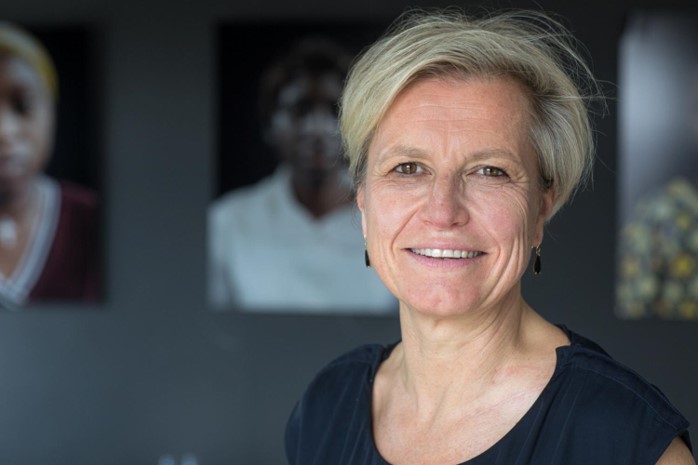
Geertrui Serneels is affiliated with the Brussels Interdisciplinary Research Centre on Migration and Minorities at the Vrije Universiteit Brussel (VUB) and is director of Solentra, an organisation offering specialised psychotherapeutic support to refugees with war trauma.