A language of tears: the collective trauma of Palestine
6 August 2025
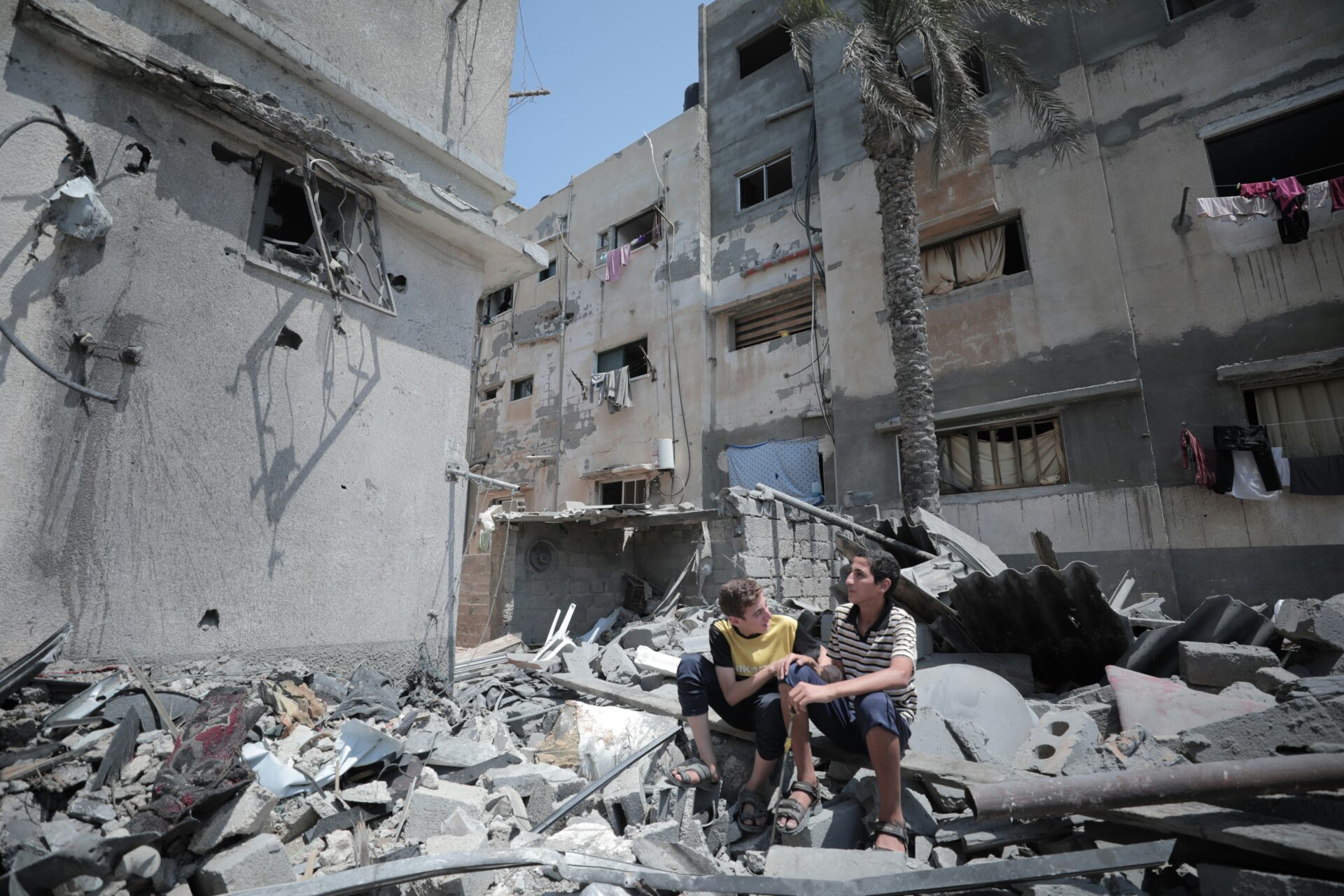
At Solentra, we listen to the stories of people who have fled their homes every day. Since the beginning of the devastating Israeli violence in Gaza, we immediately started working on a crisis offer for Palestinian refugees here in Belgium. We assist them with individual therapy, stress reduction programs, and group sessions, and also offer broad support to aid workers who accompany Palestinian refugees. In our clinic, we see people dealing with the impossible. People who, despite everything, continue to see the people they once were and hope to become again one day. However, that hope is slowly fading, and the hopelessness is growing. Without hope, healing is impossible. Therefore we can no longer remain silent. Based on our practical experience and the powerlessness we feel, we want to give our clients a voice to testify.
Cut off from family
“Our language has become a language of tears,” says a father who was separated from his children. Many of our Palestinian clients have lost family members or do not know whether their loved ones are still alive. Many have family members who are trapped in Gaza, with no prospect of a safe way out. The images and messages they receive are often unbearable and increasingly hopeless. Previously, the situation seemed temporary, but now it feels as if things will never get better.
The psychological impact is particularly severe. Every day, people report panic, insomnia, feelings of guilt, and existential despair. We see clients who have been cut off from their families and who have lost touch with their identity and their prospects for the future. Some fled to Belgium alone and are waiting in vain for family reunification. Many receive daily messages from family members about hunger, violence, and loss. Constant contact with the reality in Gaza, via social media and WhatsApp, creates a state of constant alertness and fear. One woman says, “The bombs are falling in Gaza, but we feel the impact here too.”
People are desperate and begging us for help. We receive emails from clients asking us to do something, to help bring their families here, to contact the relevant authorities. We read “please help me save my wife’s life before it’s too late” and receive questions such as “how do I explain to my six-year-old daughter that the rules prevent her from coming here and living in safety?” The girl does not understand why her father is not bringing her to Belgium. She thinks he is stopping her.
“The bombs are falling in Gaza, but we feel the impact here too.” – Palestinian client
No trauma therapy without hope
The legal processes, the often seemingly arbitrary rules, and the constant uncertainty are debilitating. Many have everything in order to bring their family members over, but are repeatedly confronted with administrative obstacles and endless procedures. The hope of reunification is repeatedly dashed. Palestinians suffer trauma upon trauma, partly caused by current policies. The disruption of families, acute grief, and loss of trust in institutions lead to serious psychosocial damage.
As trauma psychologists, we encounter the limits of what individual treatment can achieve when collective trauma is structurally denied. We cannot heal individual wounds if the bigger picture is ignored. The lack of political recognition of Palestinian suffering is paralyzing and robs people of all hope. This applies not only to our clients, but also to the care we try to provide. Without hope, trauma therapy is impossible. Recently, we have seen tentative signs from government leaders on the international stage; finally, a few glimmers of hope, finally a cautious change of direction. Let us hope that this silver lining does not come too late, and that the trauma does not take root transgenerationally in the hearts of the younger generation.
We cannot heal individual wounds if the bigger picture is ignored.
Lights among the rubble
Signs of solidarity and recognition, such as public expressions of support, people taking to the streets, and emergency aid standing by at the border, are a comfort to many Palestinians and a sign that they are not alone. Even a small gesture can be of great significance: the feeling that someone is listening, that their story is being acknowledged, and that there is room for their grief can bring relief, if only for a moment.
A Palestinian father showed us a photo of his son in Gaza wearing a new T-shirt on his birthday, with the most radiant smile on his face. Even amid the rubble, there are glimmers of light. At the end of each session, the man assures us: “Next time, I’ll be sitting here with my family!”
We share his hope and call for a policy that no longer denies the suffering of Palestinian families. Recognition starts with words, but requires concrete actions to make them strong. Relaxing family reunification procedures, speeding up evacuations, and ensuring greater transparency and humanity in decision-making are urgent and necessary.